Buyers Guide
EXPLORING BOUNDARIES: DISCOVER THE ADAPTOG RESEARCH BUYERS GUIDE
Welcome To The Adaptog Research Buyers Guide
The Adaptog Research Buyers Guide is your gateway to a world of knowledge, discovery, and inspiration. Through this platform, we aim to provide you with engaging content that explores the fascinating realm of research, its impact on weight management, and the exciting breakthroughs happening within our organization. We invite you to immerse yourself in our Buyers Guide, follow our updates, and be part of the journey toward advancing healthcare through the power of knowledge. Together, let's explore new frontiers, challenge conventions, and transform lives.
BUYERS GUIDE
Retatrutide (Research Compound)
What is Retatrutide?
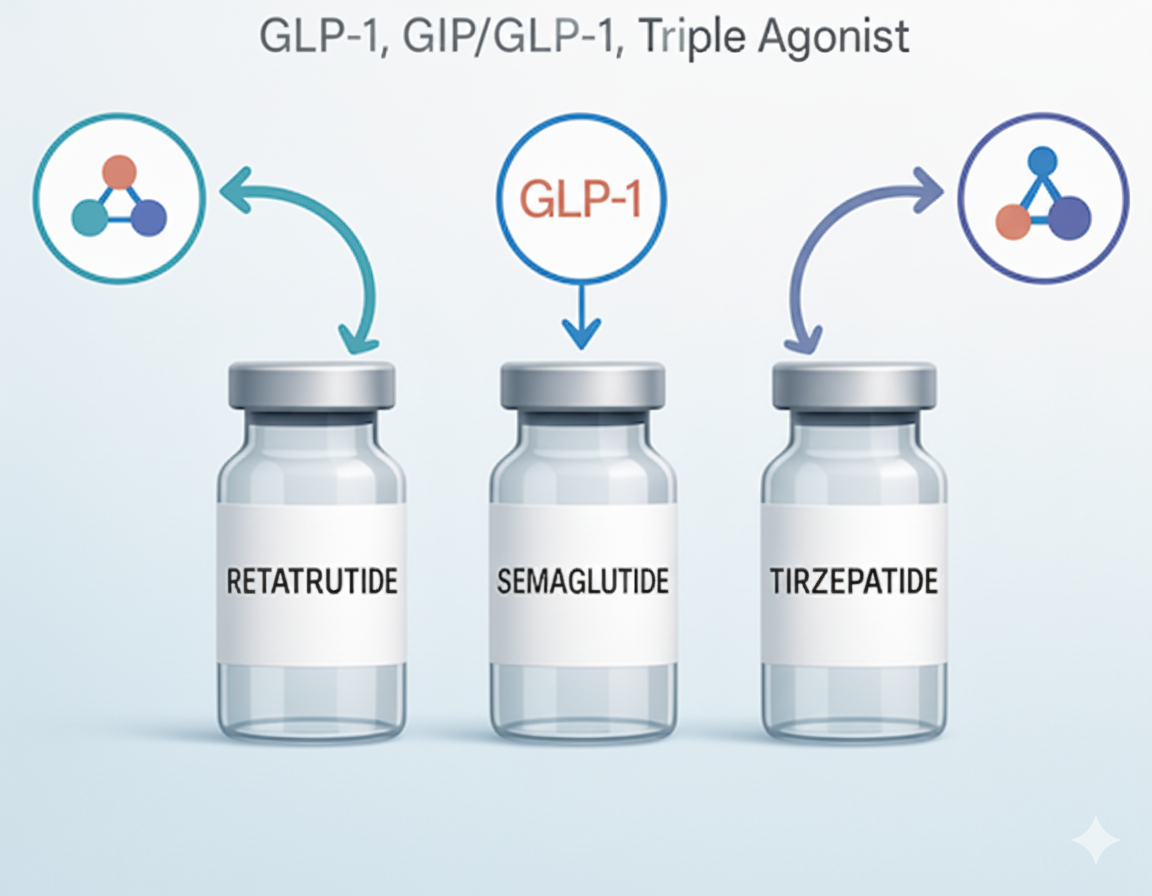
Retatrutide (LY3437943) is an experimental peptide developed by Eli Lilly that is currently under clinical investigation. It functions as a triple agonist at the GLP-1, GIP, and glucagon receptors. This receptor activity has made it a subject of growing interest in metabolic research, particularly in areas examining energy balance, appetite regulation, and glucose metabolism.
It is important to note that Retatrutide is not approved for human consumption, treatment, or supplementation. It is classified as a research chemical and should only be obtained and handled by qualified professionals within controlled laboratory environments.
Why Researchers Are Interested in Retatrutide
In both preclinical and early human studies, Retatrutide has attracted attention because it combines the activity of multiple metabolic pathways, engages GLP-1, GIP, and glucagon simultaneously, and has been studied for its pharmacokinetic properties and long half-life. This combination places Retatrutide within a new class of multi-receptor agonists currently being evaluated for complex metabolic models. These findings are preliminary and do not establish any therapeutic conclusions until further clinical evaluation and regulatory approval are completed.
Legal and Regulatory Status
In the United Kingdom, the European Union, and the United States, Retatrutide is not authorised as a medicine, food, or supplement. It may only be offered as a research chemical for laboratory purposes. Marketing Retatrutide with medicinal claims, such as promoting fat loss or blood sugar control, is unlawful and may lead to regulatory enforcement actions by bodies such as the MHRA or FDA. For this reason, buyers should only obtain the compound from suppliers who demonstrate compliance and provide the correct supporting documentation.
Choosing a Supplier
When sourcing Retatrutide, researchers should work only with vendors who can demonstrate analytical verification, such as third-party Certificates of Analysis with HPLC and mass spectrometry data. The compound should be supplied in appropriate formats such as lyophilised powder and stored using validated cold-chain logistics. Reputable suppliers will be transparent about their sourcing, quality control processes, and regulatory compliance, and will make it clear that the product is intended exclusively for research use and not for human consumption.
Handling and Storage Considerations
Retatrutide should be stored at minus twenty degrees Celsius or lower in order to maintain long-term stability. Repeated freeze–thaw cycles should be avoided. Researchers handling the compound should always use sterile technique and appropriate laboratory personal protective equipment. Disposal must follow institutional guidelines for laboratory chemical waste.
Safety and Ethical Use
Retatrutide has not been approved for human use, and no safety data exist for consumers outside of tightly controlled clinical research. It must not be sold, promoted, or used as a supplement, therapeutic, or performance-enhancing product.
Conclusion
Retatrutide is an emerging research compound of considerable scientific interest, particularly within peptide and metabolic research. Researchers must ensure that they obtain it only from credible suppliers who provide verified analytical data and comply with research-only restrictions. By following correct sourcing, storage, and handling practices, laboratories can contribute meaningfully to the growing body of knowledge on this novel peptide.
Buyer’s Guide: Semaglutide (Research Compound)
What it is
Semaglutide is a long-acting GLP-1 receptor agonist that has been engineered as an acylated peptide to increase albumin binding and extend half-life. It is widely studied in laboratory settings that explore energy balance, appetite signalling, and glucose-related pathways. This material is not a medicine and is not intended for human consumption.
Legal and Regulatory Status
Research-grade Semaglutide is not authorised as a medicine, food, or supplement in the UK, EU, or US. Under UK law, any medicinal claims would trigger classification under the Human Medicines Regulations 2012, which prohibit the advertising of unlicensed medicines. For this reason, suppliers and researchers must avoid any references to diseases, therapeutic benefits, comparisons with licensed pharmaceuticals, or testimonials suggesting health outcomes.
Formats Available
Semaglutide is most reliably supplied as a lyophilised powder in sealed vials, which provides stability and allows for controlled storage. Some suppliers also offer premixed solutions or pen-style presentations, although these carry significant regulatory risk in the United Kingdom because they resemble authorised pharmaceutical presentations. In all cases, reputable vendors should disclose the precise form, counter-ion, and peptide content on their Certificates of Analysis.
Quality and Documentation
Buyers should obtain Semaglutide only when suppliers provide robust documentation. This includes a Certificate of Analysis showing a purity level of ninety-eight percent or higher by HPLC, identity confirmation by mass spectrometry, and impurity profiling. Residual solvent and heavy metal testing in line with international standards should also be available, as well as sterility and endotoxin results where relevant. Storage instructions, batch numbers, manufacture and retest dates, and evidence of GMP or ISO-based quality systems should all be made available.
Storage and Handling
Semaglutide should be shipped under validated cold-chain conditions with temperature logging. Unopened vials should typically be stored at minus twenty degrees Celsius. Once reconstituted for laboratory use, short-term storage at between two and eight degrees Celsius is appropriate, but repeated freeze–thaw cycles should be avoided. All handling should be conducted using sterile techniques and full laboratory protective equipment.
Supplier Reliability
Reputable suppliers are transparent about their analytical testing and provide sample chromatograms or spectra where possible. They maintain consistent lot sizes, provide reference standards for method validation, and ensure their marketing copy is compliant with UK law. In contrast, suppliers offering consumer-ready pens, before-and-after photographs, weight-loss claims, or celebrity endorsements should be treated as non-compliant and avoided.
Conclusion
Semaglutide is a widely studied peptide that continues to be of interest in research on incretin biology and energy regulation. Laboratories sourcing this material should demand full documentation, careful storage, and complete transparency from suppliers, while remaining aware of strict regulatory limits on how such compounds may be presented and advertised.
Buyer’s Guide: Tirzepatide (Research Compound)
What it is
Tirzepatide is a synthetic peptide with dual agonist activity at both the GIP and GLP-1 receptors. It has been engineered as an acylated peptide to extend exposure time and is of significant interest in studies of incretin biology and multi-pathway metabolic signalling. This compound is not a medicine and is not suitable for human consumption.
Legal and Regulatory Status
Research-grade Tirzepatide is not authorised as a medicine or dietary supplement. Under UK regulations, any marketing language that refers to conditions, treatments, or comparisons with prescription pharmaceuticals risks reclassification of the compound as a medicine, even if the product is labelled for research use only.
Forms Supplied
Tirzepatide is most commonly offered as lyophilised powder in sealed vials, which ensures stability and traceability. Some suppliers may present solution formats, but these are less stable and carry higher compliance risks for non-clinical use. Responsible vendors should always disclose peptide content, net fill, and supporting analytical data.
Quality Standards
A proper Certificate of Analysis should accompany each batch, confirming purity of ninety-eight percent or greater by HPLC and identity confirmation by LC-MS. Impurity profiling, sterility, endotoxin results, and validated storage statements are all indicators of responsible manufacture and supply. Traceability through lot numbers, manufacture dates, and retest periods is essential for reproducibility in laboratory work.
Storage and Handling
Tirzepatide should be stored long-term at minus twenty degrees Celsius and protected from light and moisture. Shipping should take place in validated temperature-controlled packaging with indicators. On receipt, storage conditions and lot integrity should be logged, and thaw cycles should be minimised by aliquoting material under laboratory SOPs.
Supplier Credibility
Reliable suppliers demonstrate their competence by publishing analytical method summaries, providing reference chromatograms, and maintaining compliant and neutral product descriptions. Any appearance of consumer marketing, such as claims about fat loss, diabetes management, or weight control, indicates a non-compliant vendor and should be avoided.
Conclusion
Tirzepatide represents an important area of study within peptide and metabolic research. Laboratories sourcing this compound should do so only from vendors who provide full analytical support, stable storage and shipping processes, and legally compliant product information. Proper handling and adherence to regulatory boundaries will ensure research integrity and minimise compliance risks.