Extra body weight and high blood sugar levels continue to climb each year in the United States. The Centers for Disease Control and Prevention estimates that more than forty percent of adults live with obesity, while about thirty-seven million citizens have diabetes. Those numbers explain why doctors and patients pay close attention when new medicines arrive.
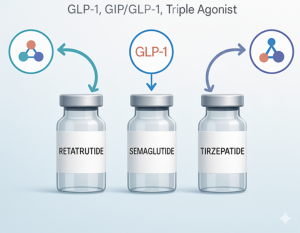
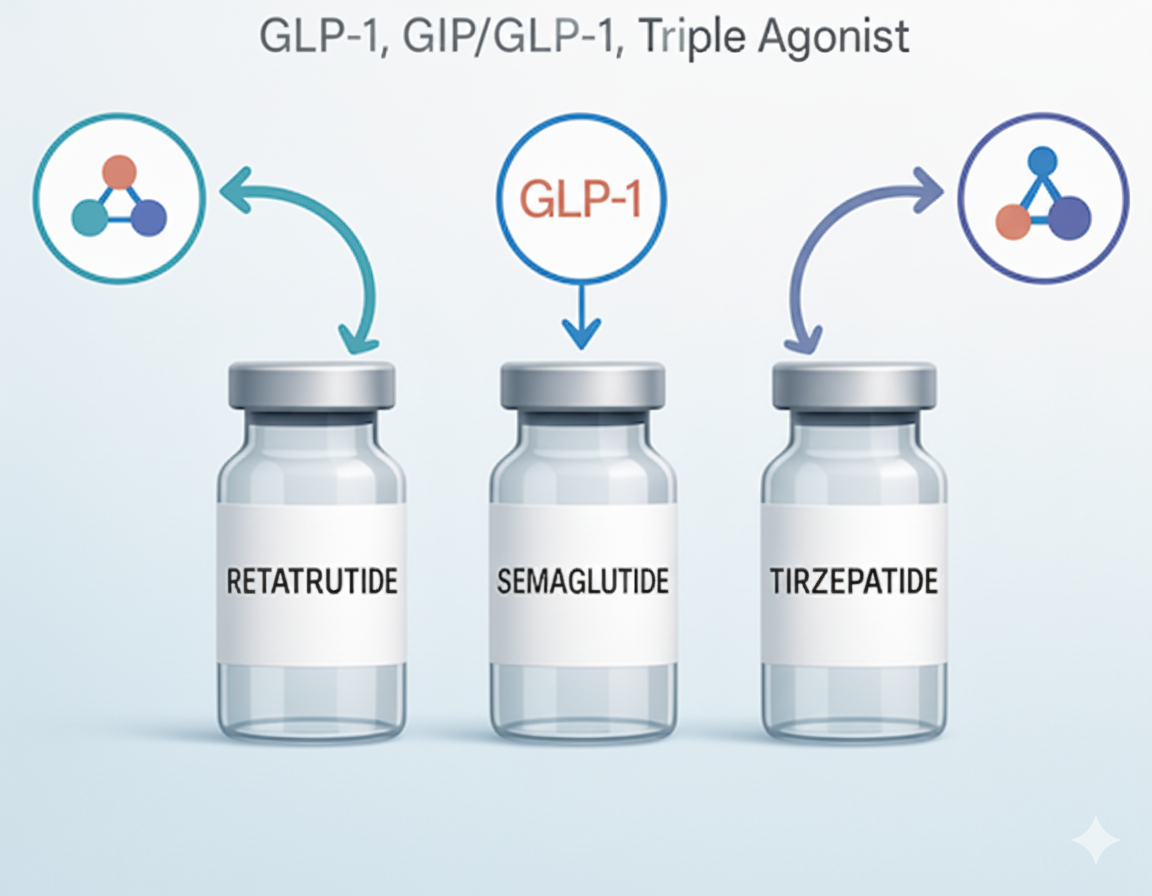
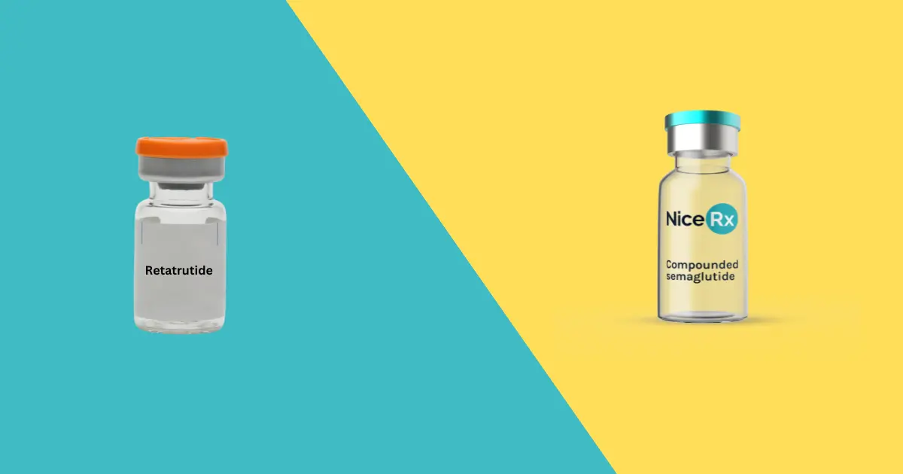
One of the newest medicines is Adaptog Retatrutide, a once-a-week shot that hit the stage through Eli Lilly research labs. The older but still popular rival is Semaglutide, sold as Ozempic, Wegovy, and Rybelsus by Novo Nordisk.
Both drugs stimulate GLP-1, the gut hormone that normalizes appetite and insulin. Retatrutide, however, adds action on two more hormone paths, giving it a different risk-and-benefit map.
How Semaglutide Works in the Body?
Semaglutide belongs to the GLP-1 receptor agonist family. GLP-1 is short for glucagon-like peptide-1, a messenger that the intestine releases after food intake. The hormone tells the pancreas to push out insulin, blocks extra sugar release from the liver, and slows how quickly the stomach empties. The slow emptying gives the brain a full-stomach signal, so many people eat fewer total calories.
Semaglutide locks onto the GLP-1 receptor and stays there for about seven days. The weekly dosing keeps the receptor busy continuously, unlike the body’s native hormone that fades within minutes. That long grip strengthens each of the natural actions.
Patients normally start the drug at 0.25 mg per week. The dose ramps up every four weeks until the pen reaches 1 mg, 2 mg, or 2.4 mg, depending on the brand and goal. The low-start, slow-rise plan limits stomach-related side effects such as nausea, vomiting, and loose stool.
New Twist in Retatrutide: Triple Hormone Path
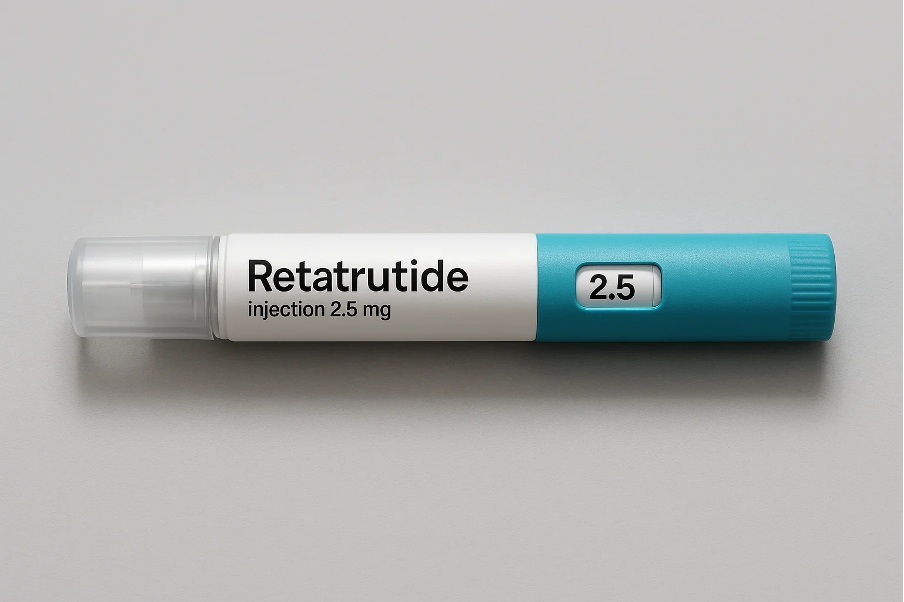
Adaptog Retatrutide starts with GLP-1 activity, then adds two extra locks. The second lock is the GIP receptor. GIP is another gut hormone that boosts insulin and may help the body burn fat faster. The third lock is the glucagon receptor. A gentle nudge on glucagon tells liver cells to use stored fat for energy instead of hoarding it.
Researchers refer to this design as a “tri-agonist.” Early data show that hitting three receptors together may shrink body weight further than GLP-1 action alone. The practical result is larger calorie burn along with calorie cut-down. Still, the triple concept brings new questions about safety, especially for heart rhythm and gallbladder issues.
Weight-Loss Data Head to Head
Semaglutide Numbers
- STEP trials, published in 2021, enrolled close to five thousand participants who were either overweight or had obesity. Patients on 2.4 mg Semaglutide plus counseling lost around twelve percent of starting weight after sixty-eight weeks. People on placebo lost about two and a half percent.
- Roughly one in three participants on the drug dropped twenty percent or more of their body weight, a level once seen mostly with bariatric surgery.
- Average weight loss came close to thirty pounds on the scale.
Retatrutide Early Figures
- Phase 2 data, released in 2023, tested doses from 4 mg to 12 mg in people without diabetes who were overweight.
- At forty-eight weeks, patients on the highest strength of Adaptog Retatrutide lost twenty-four percent of body weight, or about fifty-eight pounds in an average size adult.
- Two smaller dose arms saw losses of seventeen percent and fifteen percent.
- Nearly every volunteer dropped at least five percent, the benchmark the Food and Drug Administration uses for an effective weight-management drug.
Longer studies will decide if those numbers hold in real-life clinics, because early trials use tight visit schedules, dietary coaching, and extra lab draws.
Blood-Sugar Control in Adults with Diabetes
Semaglutide Results
- SUSTAIN trials linked Semaglutide to a one-point to one-and-a-half-point drop in HbA1c over twelve months.
- About seventy percent of users reached an A1c goal below seven percent, the everyday target for most adults with diabetes.
- The drug also cut fasting plasma glucose by up to fifty mg/dL.
Retatrutide Early Readings for Glycemic Health
- Volunteers in the phase 2 program who entered with type 2 diabetes saw mean A1c fall from eight-point-zero to below six.
- Fasting glucose slid by more than sixty mg/dL across the largest dose group of Adaptog Retatrutide.
- A small but measurable rise in insulin sensitivity showed up on clamp studies.
- Less than five percent needed to add an extra diabetes pill by week twenty-six, compared with more than twenty percent on matching placebo.
Effects Beyond the Scale and Lab Numbers
Blood Pressure and Lipids
Both drugs nudge systolic pressure down by roughly five to ten mmHg, which helps the heart and kidneys. LDL cholesterol and triglycerides also decrease modestly, likely because overall food intake falls and some weight shifts from harmful belly fat.
Liver Fat Retatrutide
Patients with fatty liver disease often worry about scar tissue down the road. Early MRIs from trials of Adaptog Retatrutide showed hepatic fat content plummet by sixty-five percent in half a year. Semaglutide studies average around forty percent decline, still helpful but not to the same degree.
Kidney Markers
Protein in the urine, a red flag for diabetic kidney disease, drops with both drugs, but long-term kidney protection data are still ongoing for Retatrutide.
Side-Effect Landscape

Patients should expect gastrointestinal symptoms with either medicine because slowed gut motion affects most users at first.
Semaglutide common side effects:
- Mild to moderate nausea
- Loose stool or constipation
- Reflux or sour stomach
- Headache and fatigue
- Rare: gallstones or raised pulse rate
Adaptog Retatrutide adds similar complaints plus:
- Heart rate may rise by ten to fifteen beats per minute in the first three months, then level off.
- Slightly higher chance of mild increases in blood pressure during dose escalation.
- Occasional anxious feeling or jitteriness, believed to come from the glucagon branch of action.
- Safety boards watch for arrhythmia, though late-phase data have not raised alarms so far.
Red-flag signs that warrant urgent care include severe stomach pain, persistent vomiting, yellow skin tone, or visual changes. Persons with a personal or family history of medullary thyroid cancer should avoid both drugs because rodent studies raised a theoretical risk.
Which Person Fits Which Drug
Best drug choice balances goals, health status, budget, and personal comfort with side effects.
Semaglutide may fit when:
- A1c is only mildly high and weight loss of ten to fifteen percent feels like a win
- Insurance covers Ozempic or Rybelsus without extra forms
- Heart rhythm or gallbladder history makes extra caution wise
Adaptog Retatrutide could work when:
- Body mass index is 35 kg/m2 or higher and at least twenty percent loss is the goal.
- Excess liver fat or high triglycerides have not improved through earlier steps.
- The patient can visit the doctor’s office monthly during the first half year for vital sign checks, because heart rate needs monitoring.
The decision is rarely permanent. Some people start on Semaglutide, meet halfway targets, and stay there. Others lose insurance for the older drug and try the new one when it reaches the market.
Dosing Steps and Practical Tips
For Semaglutide:
- Inject on the same day each week, with or without food.
- Rotate sites among abdomen, thigh, or back of upper arm.
- Store pens in the refrigerator; an open pen can sit at room temperature for fifty-six days.
- Make dose changes every four weeks unless nausea lingers; slower ramps lower gut reactions.
For Adaptog Retatrutide:
- vial-and-syringe form may arrive first, so users need to draw up the dose until a pen device launches.
- Start at the lowest color-coded vial to allow the heart and stomach time to adjust.
- Doctors often check pulse and blood pressure at weeks two, four, and eight for the first few months.
- Missed doses stay within a three-day grace period; after that, restart at the entry level to avoid sudden pulse surges.
Overlap with Lifestyle Care
Neither drug erases the need for balanced meals and regular movement. Trials for both drugs enrolled volunteers who also met with diet coaches. Translating those benefits to a busy life means:
- Fill half the plate with non-starchy vegetables.
- Aim for protein at each meal, because lean mass tends to drop as weight falls.
- Choose water or unsweetened drinks to limit fast-acting carbs that can trigger reflux.
- Walk, bike, or lift weights after the nausea phase passes; muscle activity helps keep lost pounds away.
Counseling with a dietitian once a month doubles the odds that weight stays off after one year.
Comparison Table
| Feature | Semaglutide | Adaptog Retatrutide |
| Hormone paths | GLP-1 | GLP-1 + GIP + glucagon |
| Mean weight drop at one year | 12–15% | 20–24% (Phase 2) |
| A1c lowering | ~1.2% | ~2.0% (early read) |
| Heart rate change | Minor rise | 10–15 bpm in first 12 weeks |
| Injection frequency | Weekly | Weekly |
| FDA approval status | Approved for diabetes and weight management | Pending |
| Common side effects | Nausea, loose stools, headache | Same plus jitteriness, higher pulse |
Conclusion
The next eighteen months will set the final label wording for Adaptog Retatrutide, the sticker price, and whether health plans greet it with open arms. More head-to-head studies will place the two drugs in the same trial to measure which one keeps weight off and protects hearts, livers, and kidneys over the long haul.
Until then, patients who already benefit from Semaglutide should feel no rush to switch. New starters who need the largest possible weight reduction or have stubborn liver fat may want to watch for Retatrutide launch dates and coverage bulletins. By keeping goals clear, asking direct questions, and tracking body changes, every person can work with the care team to pick the right medicine at the right time.