Wondering What Is Retatrutide? This is actually A new hope in the fight against obesity…
In recent years, weight loss injections like Wegovy and Mounjaro have been making waves. They’ve helped thousands of people lose weight when diets, exercise, and older treatments didn’t work. But now, there’s a new contender generating a lot of buzz: Retatrutide.
Sometimes called “Triple G,” Retatrutide is an experimental medicine that could take weight loss to an entirely new level. Let’s explore what it is, how it works, what results we’ve seen so far, and what it might mean for the future of obesity and diabetes care.
Table of Content
- A new name in the weight loss conversation
- Why is Retatrutide different?
- What is Retatrutide used for?
- What have the studies shown?
- How does it compare with Wegovy and Mounjaro?
- How is Retatrutide taken?
- What about side effects?
- Where things stand today
- Why it matters
- Is Retatrutide available in the UK?
- FAQs
- What does the future hold?
- How quickly does it work?
- How is it different from Ozempic or Wegovy?
- What about access and prescriptions?
- Final Thoughts
Why is Retatrutide different?
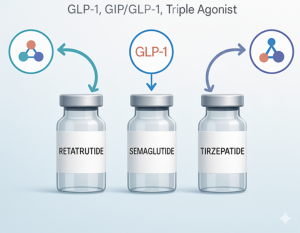
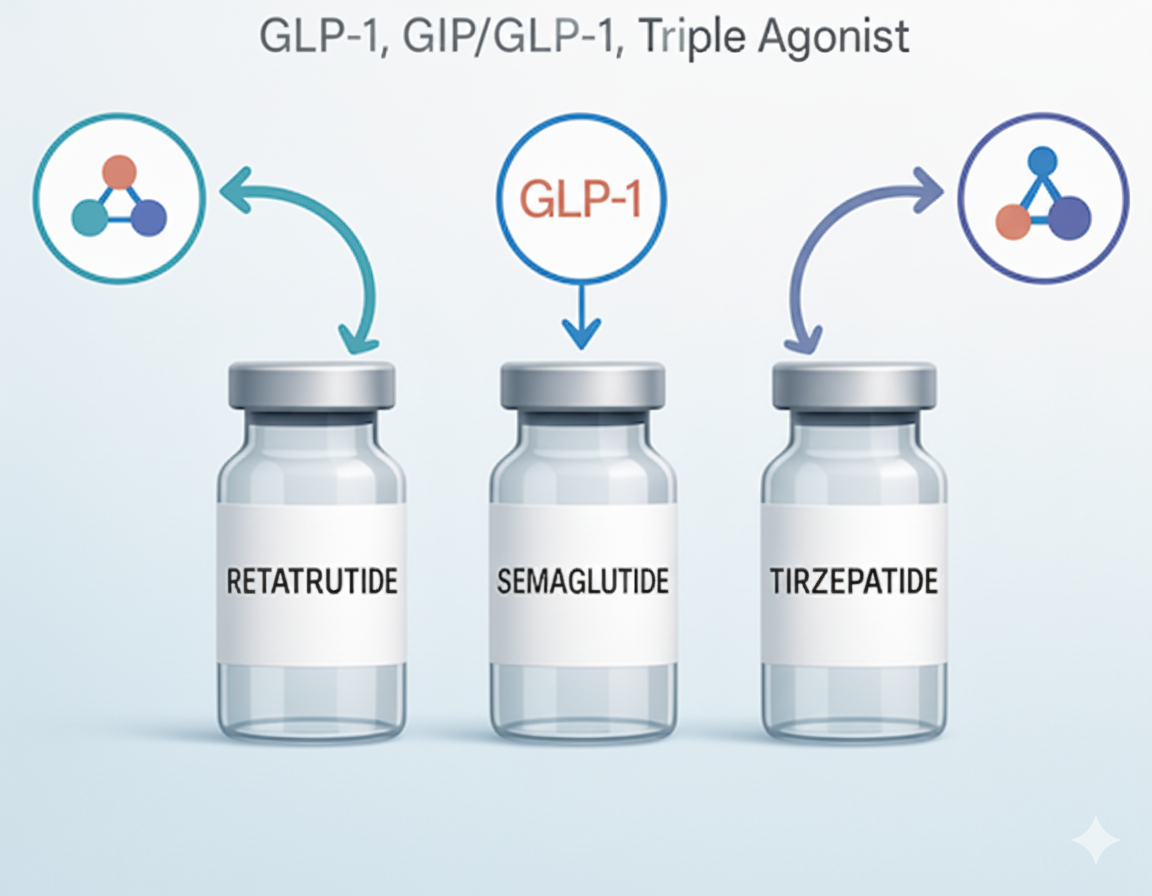
Most weight-loss injections copy one or two natural hormones that help regulate appetite and blood sugar. Retatrutide goes a step further. It acts on three different hormones at the same time:
- GLP-1 – tells your brain you’re full, helps you eat less, and slows digestion.
- GIP – supports your body in handling sugar after meals.
- Glucagon – encourages the body to burn fat stores for energy.
That’s why it’s nicknamed “Triple G.” Instead of tackling weight from just one angle, Retatrutide works on hunger, metabolism, and fat-burning simultaneously.
What is Retatrutide used for?
Retatrutide isn’t being studied for weight loss alone. Researchers are also looking at how it could support other conditions closely linked to obesity and metabolism.
1. Obesity management
This is where Retatrutide has made headlines. In early trials, people lost up to a quarter of their body weight in less than a year. That’s a level of weight loss usually only seen after surgery. For those who’ve struggled with diets or other treatments, Retatrutide could be a game-changing option if it continues to prove safe and effective.
2. Type 2 diabetes
Obesity and type 2 diabetes often go hand-in-hand. Retatrutide doesn’t just help with weight loss it also helps the body handle blood sugar more efficiently. By boosting insulin sensitivity and reducing glucose spikes after meals, it may improve long-term diabetes control. For patients, this means better blood sugar stability and fewer risks of complications.
3. Fatty liver disease
Another exciting finding is Retatrutide’s potential role in treating non-alcoholic fatty liver disease (NAFLD). This condition happens when too much fat builds up in the liver, often in people who are overweight or have diabetes. In a recent study, Retatrutide not only reduced weight but also cut down liver fat, which could help prevent liver damage in the future.
What have the studies shown?
The early research is eye-catching.
In a large phase 2 clinical trial published in The New England Journal of Medicine (2023), people taking Retatrutide lost an average of 24% of their body weight in just under a year.
- To put that into perspective, someone weighing 100kg could lose around 24kg.
- At the highest doses, more than a quarter of participants lost over 30% of their body weight, an outcome rarely seen with existing treatments.
- Weight loss also began fairly quickly. Some participants noticed results in the first month, with steady progress over the year.
On top of weight reduction, researchers also noticed improvements in blood sugar control and liver fat reduction, suggesting Retatrutide could help with type 2 diabetes and fatty liver disease (NAFLD) too.
How does it compare with Wegovy and Mounjaro?
| Treatment | Hormones Targeted | Average Weight Loss | Key Advantage |
| Wegovy | GLP-1 only | 15–17% (72 weeks) | Appetite suppression |
| Mounjaro | GLP-1 + GIP | 22–25% (72 weeks) | Dual-action boost |
| Retatrutide | GLP-1 + GIP + Glucagon | 24% (48 weeks) | Triple action, adds fat-burning |
The difference comes down to breadth of action. Retatrutide adds glucagon into the mix, giving it a fat-burning effect that other medicines don’t directly provide. That may explain why results have been so strong, even in a shorter time frame.
How is Retatrutide taken?
Like Wegovy and Mounjaro, Retatrutide is designed as a once-weekly injection. It’s given under the skin using a pen-style injector, usually in the abdomen, thigh, or upper arm.
To make it easier on the body, doses are started low and gradually increased. This helps reduce the chance of side effects while the body adjusts.
What about side effects?
Most of the side effects reported so far are mild and temporary, especially during the first few weeks. They include:
- Nausea
- Vomiting
- Diarrhoea or constipation
- Stomach discomfort
These are similar to what people experience with other weight-loss injections. In most cases, they improve as treatment continues. Importantly, no serious safety issues have been highlighted in the trials so far.
Where things stand today
It’s important to remember that Retatrutide is still in the research stage. The promising results we’ve seen come from early and mid-stage trials. Larger studies are now underway to confirm how well it works and how safe it is in a wider range of people.
That means it isn’t available to patients yet. If the results hold up, it could become a powerful new tool for doctors to treat obesity, diabetes, and liver disease in the future.
Why it matters
Studies have proved that obesity isn’t just about weight. It increases the risk of diabetes, heart disease, liver problems, and more. For many people, traditional weight loss methods aren’t enough not because of lack of willpower, but because of how the body regulates hunger and energy.
Medicines like Retatrutide are designed to work with the body’s own biology, giving people a fairer chance at achieving and maintaining healthier weight. If confirmed, this could be one of the most significant advances in obesity care yet.
Is Retatrutide available in the UK?
Not yet.
- Retatrutide is still in late-stage clinical trials (Phase 3).
- If everything goes well, it may be approved in the US and UK from 2026–2027.
- After approval, the NHS would still need to review whether it will be offered for free.
For now, the only weight-loss injections available in the UK are Wegovy and Mounjaro (by prescription). Be cautious: Some websites are already selling “Retatrutide.” These are unapproved, unregulated, and unsafe.
FAQs
What does the future hold for Retatrutide?
If approved, Retatrutide could become a game-changer:
- Helping people lose more weight than current medications.
- Improving blood sugar and liver health.
- Giving doctors another tool to tackle obesity and diabetes.
But it’s not a “magic jab.” Like all weight-loss treatments, Retatrutide works best when combined with healthy eating and lifestyle changes.
How quickly does it work?
In early trials, people started noticing weight loss in the first month, with much bigger results after several months. By the end of 48 weeks, average losses reached around 24% of body weight.
How is it different from Ozempic or Wegovy?
You might be wondering if Retatrutide is just another name for The answer is no. While those medicines target one hormone (GLP-1), Retatrutide activates three hormones at once which explains its stronger results.
What about access and prescriptions?
Because it’s still in trials, Retatrutide isn’t something doctors can prescribe yet. Like all future medicines of this kind, it will eventually be prescription-only. That means no shortcuts, and no “over-the-counter” option.
Final Thoughts
Retatrutide is an investigational “triple-action” weight loss injection that targets hunger, blood sugar, and fat burning all at once. Early trials show it could help people lose more weight than any current treatment on the market, with added benefits for diabetes and liver health.It’s not available yet, but if ongoing studies continue to deliver strong results, Retatrutide may soon represent the next big leap in weight-loss medicine.
References
- Jastreboff, A. M., Kaplan, L. M., Frias, J. P., et al. (2023). Triple–hormone–receptor agonist retatrutide for obesity — a phase 2 trial. The New England Journal of Medicine, 389(6), 1–12.
DOI: 10.1056/NEJMoa2301938 - Sanyal, A. J., Lingvay, I., Lapuerta, P., et al. (2024). Triple hormone receptor agonist retatrutide for metabolic dysfunction–associated steatotic liver disease: A randomized phase 2a trial. Nature Medicine, 30, 1051–1060.
DOI: 10.1038/s41591-024-03029-2 - ClinicalTrials.gov. (2025). TRIUMPH-1, TRIUMPH-2, TRIUMPH-4 & TRIUMPH-Outcomes studies of Retatrutide (LY3437943).
https://clinicaltrials.gov/ct2/results?cond=&term=retatrutide - American Diabetes Association. (2023). Novel agents in obesity and diabetes management: Retatrutide clinical data highlights.
https://diabetesjournals.org - NHS. (2023). Type 2 diabetes – symptoms, causes, and treatment.
https://www.nhs.uk/conditions/type-2-diabetes - NHS. (2022). Non-alcoholic fatty liver disease (NAFLD).
https://www.nhs.uk/conditions/non-alcoholic-fatty-liver-disease
Eli Lilly and Company. (2023). Lilly’s phase 2 Retatrutide results published in NEJM show up to 24% mean weight reduction.